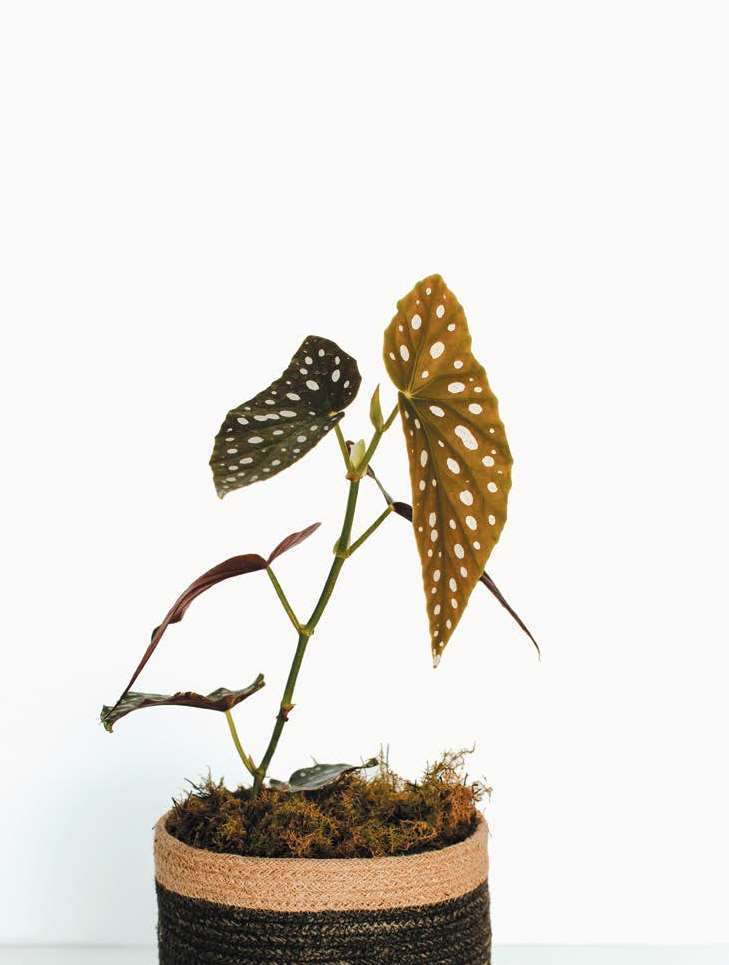
Small plants can add as much interest as a large indoor tree. Peperomias offer compact forms and varied leaf patterns, while begonias bring bold markings and unusual shapes.
Cupid’s peperomia
Green and ivory heart-shaped leaves trail over a shelf or plant stand. Its modest size makes it easy to fit into a mixed display.
Care: Bright indirect light; water moderately without leaving the mix soggy.
Emerald ripple peperomia
Deeply ridged leaves give this Brazilian species its name. The roots can rot if the pot remains wet, so a draining mix is essential.
Care: Bright indirect light; low to moderate watering; dilute fertilizer during active growth.
Watermelon peperomia
Rounded, fleshy leaves carry a pattern reminiscent of watermelon rind. Watch how the plant responds and adjust light and watering gradually.
Care: Bright indirect light; moderate watering; good drainage.
Polka dot begonia
Silver spots animate its elongated leaves, while small pale flowers add another detail. The cane-like stems can stand upright or arch outward.
Care: Bright indirect light; moderate watering; free-draining mix.
Painted-leaf begonia
Rex begonia cultivars are grown mainly for colorful, geometric foliage. They appreciate humidity, but wet leaves can encourage mildew.
Care: Bright indirect light; moderate watering; raise ambient humidity without spraying the foliage.
Place these plants where you can enjoy their markings close up. Keep the potting mix suitable for each species and avoid letting decorative outer pots collect standing water.