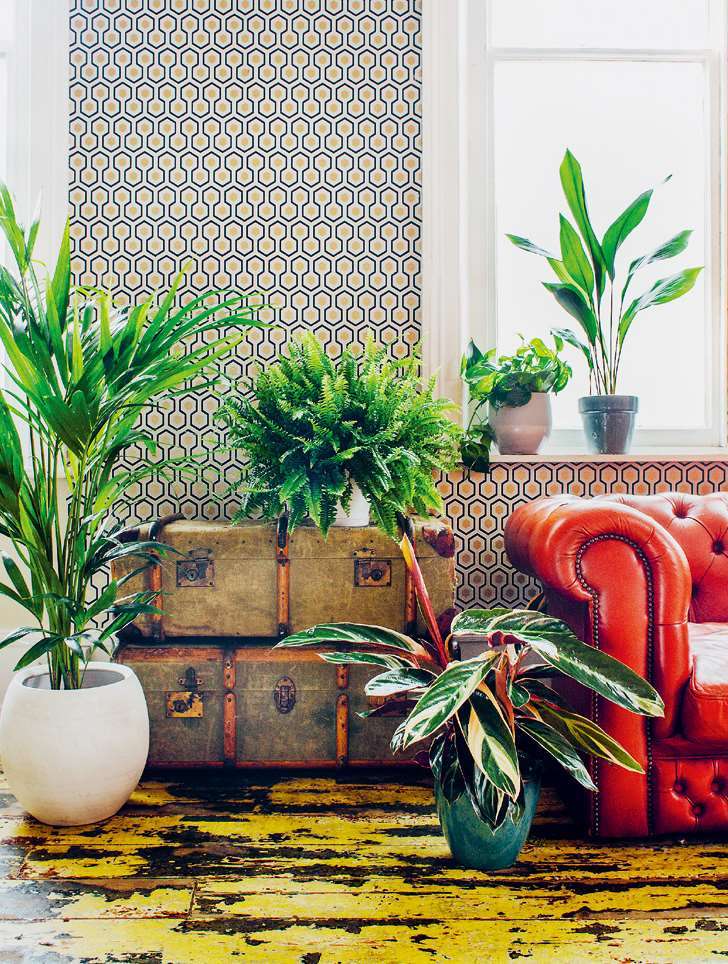
A collection of plants looks intentional when each plant has enough light and a clear visual role. Start with the room’s proportions, then combine leaves of different shapes, heights and textures. The arrangement should remain easy to water and clean as the plants grow.
Work at three heights
Give a larger floor plant enough clear space to show its form. Add a medium plant on a low table or chest and a smaller plant on a sill or shelf. This creates a change in height without packing every surface. In a compact room, one upright plant paired with a trailing one may feel calmer than several broad specimens competing for the same space.
Measure the mature spread, not just the nursery pot. A young monstera or palm may fit beside a chair now but eventually need room for wider leaves. Keep foliage out of doorways and away from heat sources. A strong decorative pot helps anchor a top-heavy plant, but the inner pot should still drain.
Mix leaves with a purpose
Pair broad leaves with fine fronds, matte foliage with glossy foliage, and upright stems with a softer trailing shape. Repeating one color or pot material can tie these differences together. Leave some empty wall or tabletop around the grouping so the individual forms are visible. If every plant is equally tall, equally bright and equally close together, the display can become visually flat.
Group plants with compatible conditions near each other, while keeping their pots separate. A fern and a drought-tolerant succulent can share a room, but their watering schedules and ideal window positions differ. Do not create a single mixed planter unless the plants genuinely have similar root and moisture needs.
Use containers as part of the composition
A simple terracotta pot can balance patterned foliage; a textured cachepot can give a plain green plant more presence. Reuse a vessel only if you can account for drainage and the plant’s weight. A favorite vintage tin may make a good outer cover for a removable nursery pot, while planting directly into an unperforated tin can leave roots sitting in water.
Live with the arrangement for a week, then adjust it. Check where sun actually falls, whether you can reach every pot, and whether leaves overlap more than expected. Plant styling succeeds when the room looks welcoming and each plant has a realistic place to thrive.