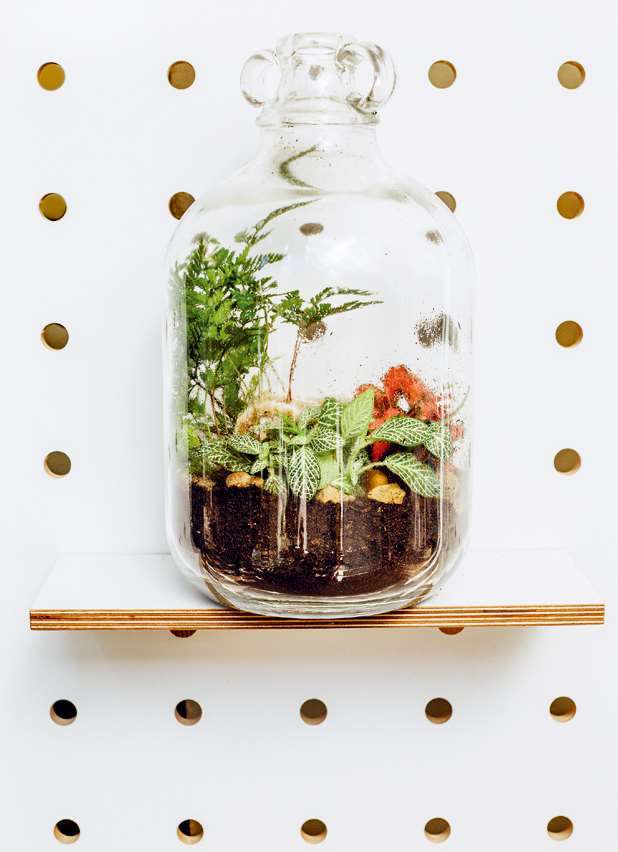
A glass container can frame a miniature planting, but the opening changes the climate around the leaves and roots. A closed terrarium holds humidity; an open container allows more air to circulate. Choose the plants for that difference first, then select the vessel.
Choose compatible plants
Small ferns, fittonia and other humidity-loving plants suit a closed or mostly closed display if they share similar light and moisture needs. Keep their mature size in mind so they do not quickly press against the glass. A cactus or echeveria needs much drier air and stronger light. These plants are better in open displays, ideally in individual draining pots that can be lifted out for watering.
Glass intensifies heat when direct sun strikes it. Set either design in bright indirect light and check its temperature before adding a sun-loving plant. Even an open bowl can trap water if it has no drainage hole. A decorative layer of stones does not turn a sealed base into a draining pot.
Build a closed terrarium
Clean the glass and add an appropriate amount of lightly moist, suitable potting mix. Place small plants with room between their leaves and the walls, firm the mix gently, and remove soil from the glass with a soft brush. Add moss or small stones only where they do not cover crowns or stems. Start with less water than you think you need, close the container, then observe it for several days.
Light condensation that appears and clears can be normal. Heavy droplets all day, mold or yellowing leaves suggest excess moisture or poor airflow. Open the lid temporarily, remove damaged material and adjust the water level. A closed terrarium is not automatically maintenance free; plants grow, and conditions must be monitored.
Use an open display carefully
For an open succulent arrangement, use a shallow vessel with drainage if possible. If the glass vessel has no hole, place small nursery pots inside and conceal them with gravel or decorative material. Water each pot separately, drain it fully, and return it to the arrangement. Do not rely on frequent misting: it wets leaves while doing little for roots and may encourage rot in succulents.
Keep a narrow-necked closed jar for humidity-loving plants and an airy bowl for dry-growing plants. This simple distinction prevents the most common terrarium mistake: combining plants that need opposite conditions because they look good together for a photograph.