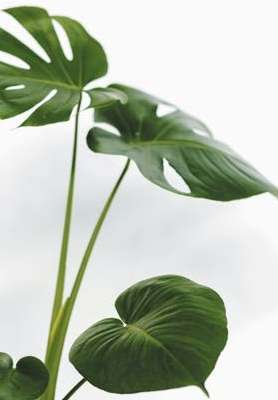
Foliage plants bring an unusually wide range of shapes, textures and colors indoors. Combine upright specimens with trailing stems and leaves of different sizes, while giving every plant the light and space it needs.
Spider’s Web fatsia
This variegated fatsia has large, glossy, palmate leaves with pale speckling concentrated toward the edges. A simple pot lets the foliage stand out.
Care: Bright indirect light; keep the mix moderately moist and well drained.
Devil’s ivy (pothos)
Pothos grows quickly and can climb or trail from a shelf. Its green or gold-marked leaves make it a forgiving choice for a first collection.
Care: Low to medium light is tolerated; water when the upper mix dries; use a draining pot.
Bird of paradise
The large, paddle-like leaves add a tropical silhouette. Orange-flowered and white-flowered forms need plenty of light to bloom indoors.
Care: Bright indirect light with some direct sun; moderate watering; good drainage.
Hardy pepper vine
This South Asian climber has attractive waxy green leaves and can be displayed on a shelf or plant stand.
Care: Bright indirect light; moderate watering; free-draining mix.
Umbrella plant
Its leaf clusters explain the common name. Good light keeps the stems compact; too little light can lead to weak, drooping growth.
Care: Bright indirect light; water moderately; avoid leaving the roots saturated.
African mask plant
Dark green leaves marked by striking pale veins make this alocasia a strong visual focal point. It is more demanding than the preceding species.
Care: Bright indirect light; keep the mix moist but not soaked and provide humidity.
Swiss cheese plant (monstera)
Monstera develops broad, cut and perforated leaves as it matures. Give the vigorous plant room to spread or a support to climb.
Care: Bright indirect light; water thoroughly after the upper few centimeters dry; drain excess water.
Peace lily
This plant can tolerate a dimmer position, though brighter indirect light gives it a better chance of producing its white spathes. Drooping leaves often signal thirst.
Care: Low to bright indirect light; moderate watering; well-drained mix.
ZZ plant
Glossy dark leaves rise from thick underground rhizomes. It suits owners who need a plant that tolerates occasional missed watering.
Care: Low to medium light; let the mix dry between waterings; provide drainage.
Spider plant
Arching striped leaves and hanging plantlets make this an easy plant to display and share. The plantlets can be rooted and potted separately.
Care: Bright indirect light; moderate watering; draining mix.
Wax plant (hoya)
The firm, waxy leaves can trail attractively, and mature plants may produce clusters of small, fragrant star-shaped flowers.
Care: Indirect light; moderate watering, reduced in cooler months; well-drained mix.
Elephant ear
Large leaves in shades from green to deep purple create an unmistakable focal point. Some forms slow down or become dormant in winter.
Care: Bright indirect light; maintain appropriate moisture and drainage.
Arrowhead plant
Arrow-shaped juvenile leaves and a climbing habit make syngonium useful on shelves or supports.
Care: Bright indirect light; moderate watering; well-drained mix.
Alumroot
Heuchera is valued for its colorful, finely textured leaves and small bell-shaped flowers.
Care: Bright indirect light; monitor moisture; use a draining mix.
Anthurium
The glossy foliage and distinctive spathes can add color to a bright indoor collection.
Care: Bright indirect light; moderate watering; free-draining mix.
Use these care notes as a starting point. Check the plant and soil regularly, because light, season and container size change how quickly a pot dries.