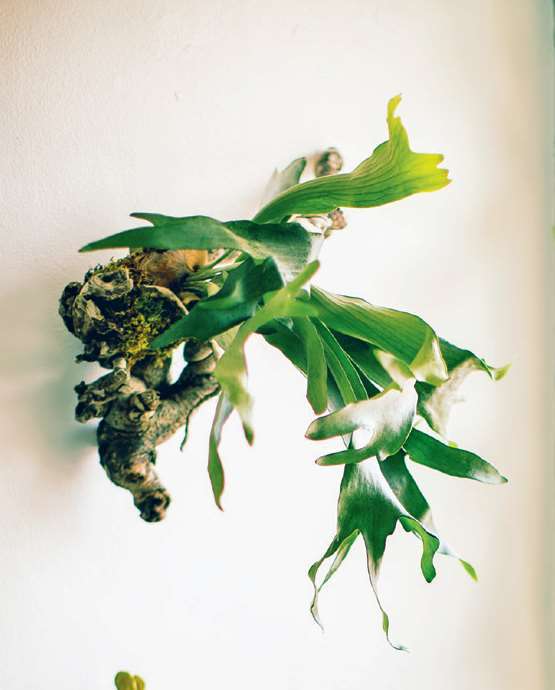
Ferns and palms bring softer texture to a room, but their leaves reveal different habits. Two ferns prefer evenly available moisture, a palm is more tolerant of a normal room, and a mounted staghorn fern needs air around its roots. Choose the display method before buying.
Bird’s nest fern
Asplenium nidus has broad, wavy fronds that emerge from a central rosette. It looks different from the fine, feathery ferns often seen in hanging baskets. Place it in indirect light and keep its mix lightly moist, never waterlogged. Water the surrounding mix rather than pouring water into the center of the rosette.
Boston fern
Nephrolepis exaltata forms a dense fountain of arching fronds. It can make a bright bathroom or a hanging planter feel lush. Give it filtered light, steady moisture and humidity with air movement. Crispy fronds often mean the plant has dried too far or sits in hot, dry air.
Parlor palm
Chamaedorea elegans is a small true palm with fine, feathery leaves. Its slow growth makes it manageable indoors. Give it gentle indirect light and water when the upper mix begins to dry. Keep it away from a radiator and check the undersides of leaves for spider mites.
Staghorn fern
Platycerium bifurcatum produces fertile fronds shaped like antlers and basal shield fronds that protect its roots. It can be grown mounted or in a suitable basket. Provide bright filtered light, good airflow and regular but not constant moisture. Allow the mounting material to drain after watering and avoid removing healthy brown shield fronds.
A fern in a conventional pot and a fern on a mount will dry at different rates. Check the growing medium itself rather than watering all four plants on a shared calendar.