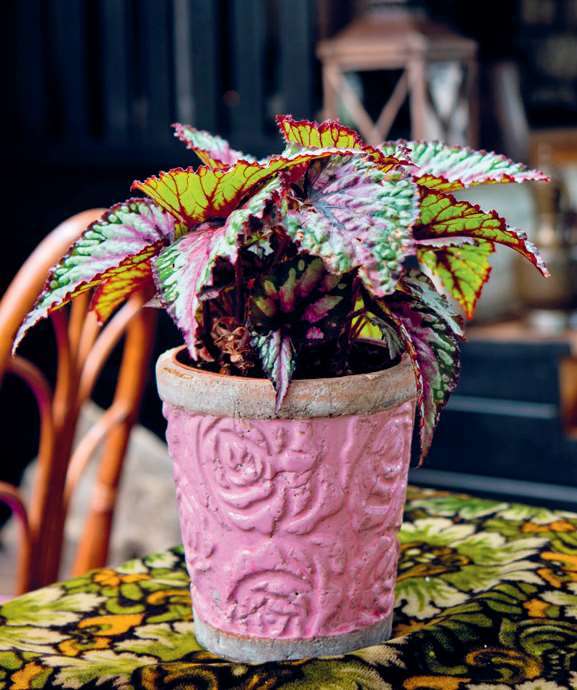
Leaf color and pattern can do the work of flowers all year. These compact plants range from easy-going peperomia to humidity-loving fittonia and rex begonia. Put them where their details are visible, then match each pot to its own moisture needs.
Chinese money plant
Pilea peperomioides holds round leaves on long stems, giving it an airy, graphic look. It can produce small offsets at the base. Use bright indirect light, rotate the pot for even growth, and water when the top of the mix dries. Separate offsets once they have enough roots.
Nerve plant
Fittonia has fine contrasting veins across its leaves. It is a good candidate for a humid display, although it still needs airflow. Keep the mix consistently lightly moist and give it filtered light. Sudden drooping often means it has dried out; repeated collapse means the routine needs adjustment.
Purple shamrock
Oxalis triangularis opens and closes its purple leaflets with changes in light. It may go through a resting phase and later return. Give it bright indirect light and a draining mix. Water during active growth, and reduce watering if the leaves naturally die back for dormancy.
Polka dot plant
Hypoestes phyllostachya carries pink, red or white speckles and stays colorful with sufficient light. Use bright filtered light and keep the mix from drying out completely. Pinch the tips to maintain a compact shape and provide humidity in a dry room.
Prayer plant
Maranta leuconeura has patterned leaves that change position through the day. It can trail gently from a shelf. Give it indirect light, steady moisture and a more humid environment. Brown leaf edges can signal dry air or sensitive water quality.
Rex begonia
Begonia rex is grown for dramatic leaves in green, silver, red and purple. Its markings are strongest when the plant receives enough gentle light. Use a light, draining mix and bright indirect light. Raise ambient humidity without repeatedly wetting the leaves, which can encourage mildew.
Watermelon peperomia
Peperomia argyreia has rounded leaves striped like a watermelon rind. Its compact habit fits a desk or plant shelf. Give it bright indirect light, a small well-drained pot, and water after the upper layer dries. Thick leaves do not mean the roots can tolerate stagnant water.
A mixed display works best when each plant keeps its own removable nursery pot. You can enjoy the color together while watering the moisture-loving and drier-growing species separately.