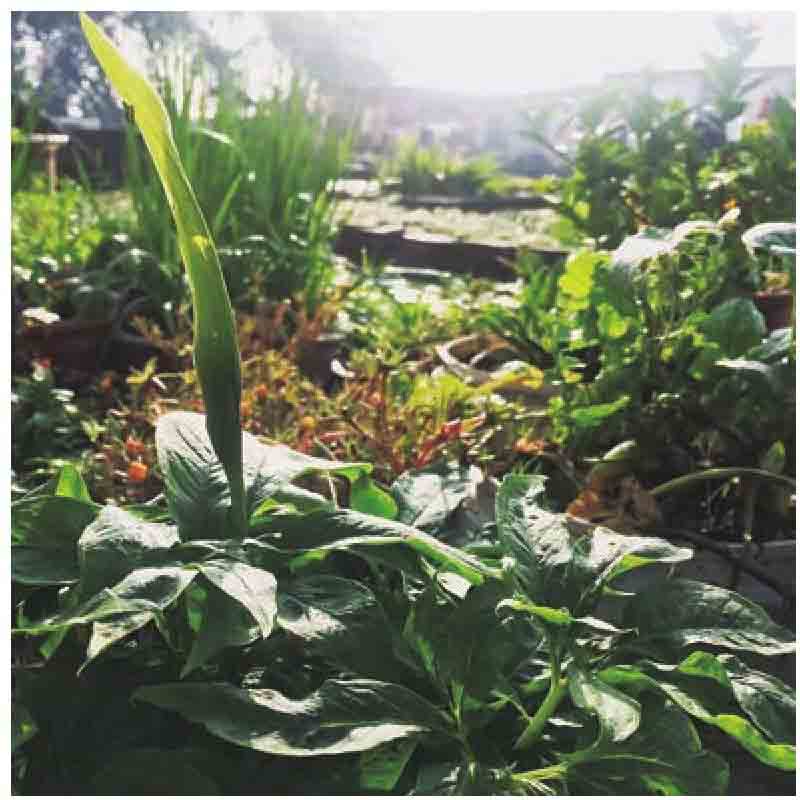
A rooftop offers sun and room for containers, but it is an exposed growing site. Wind, hot paving and limited water access can challenge plants that thrive on a sheltered balcony. Before choosing seeds, confirm that gardening is permitted and that the roof can safely carry the proposed loads.
Start with the building
Ask the property manager or a qualified professional about structural capacity, waterproofing, drainage and access. Wet soil, filled water tubs, people and stored equipment all add weight. Keep drains and fire routes clear. Avoid attaching trellises, shade cloth or irrigation to the building without permission and suitable fixings. Portable containers are often simpler than building raised beds into the roof.
Choose containers for exposure
Use stable pots with drainage and a growing mix designed for containers. Larger pots dry out more slowly and protect roots better than tiny dark pots, though they are also heavier. Anchor tall plants against wind and place delicate crops where they receive some shelter. Mulch the surface to slow evaporation, and check moisture beneath the mulch rather than watering by a fixed calendar.
Plan the water supply before planting. A roof that requires carrying heavy buckets up stairs can become difficult to maintain during a heat wave. Use an approved tap or irrigation system where possible, and check for leaks. Collecting rainwater may be useful only if the building permits it and the container is secure and covered.
Grow a manageable edible collection
Cherry radishes and leafy greens are good small-space experiments in suitable seasons. Strawberries can grow in containers if they receive enough light and regular moisture. Compact cucumbers need a large pot, support and frequent feeding; potatoes require a deeper container and more growing medium. Blueberries need an acidic mix and generally more space than a casual windowsill pot.
Herbs can make a rooftop practical as well as attractive. Basil enjoys warmth, while rosemary and thyme prefer excellent drainage. Harvest a little at a time so the plants keep growing. Start with a few pots, learn how quickly each dries in that location, and expand only when watering and access feel routine.