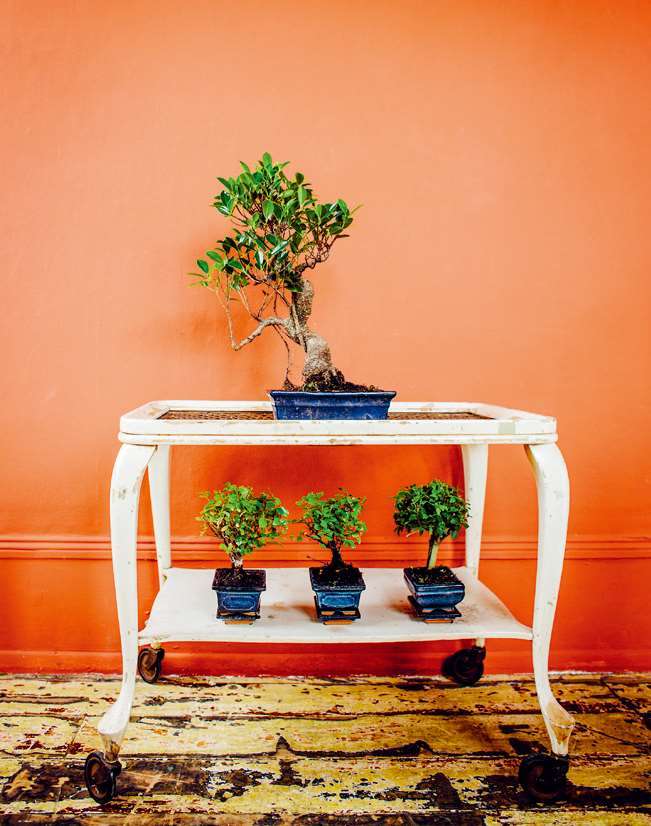
Bonsai is the practice of training a tree in a small container, not a special species that stays tiny on its own. Its appeal lies in the relationship between trunk, branches, roots and open space. The first care decision is therefore botanical: identify the tree before deciding where to display it.
Indoor and outdoor are different
Many traditional bonsai species need outdoor sun, seasonal temperature changes and a winter rest. Keeping one in a living room throughout the year can weaken it even if it looks attractive on a shelf. Tropical or subtropical species are better candidates for a bright indoor position, although they still require enough light and air. Ask the seller for the exact species and its seasonal needs rather than relying on a generic “indoor bonsai” tag.
Do not treat a fireplace mantel, dark desk or warm radiator ledge as a permanent home simply because it photographs well. A display location is useful only if the tree receives appropriate light and its shallow pot can be checked every day. Rotate the tree occasionally for even exposure if its species tolerates that handling.
Water a shallow pot carefully
A small bonsai container holds relatively little growing medium. It may dry quickly during active growth, yet can also stay wet in cool, dim conditions. Check the surface and the soil just beneath it. Water thoroughly when the species and current conditions call for it, let excess water leave through the drainage holes, and empty the saucer. A misting spray does not replace watering the roots.
Use a free-draining bonsai mix suited to the tree and feed modestly during its growing season. Dense garden soil can compact in a shallow pot and make both watering and root health harder to manage. Repotting and root work are occasional tasks, not a rescue step to perform whenever a leaf drops.
Shape slowly
Pruning maintains the silhouette, but cutting too much foliage can deprive a weak tree of energy. Learn how your species responds before trimming heavily or applying wire. Check wire regularly so it does not bite into growing bark, and remove it at the right time. Start with a healthy, affordable tree and observe it for a season; careful light and watering will teach you more than an elaborate first styling session.
A bonsai can be a long-lived part of a home, but its care follows the needs of a living tree. Let those needs determine the display, and the form will have a better chance to develop over time.