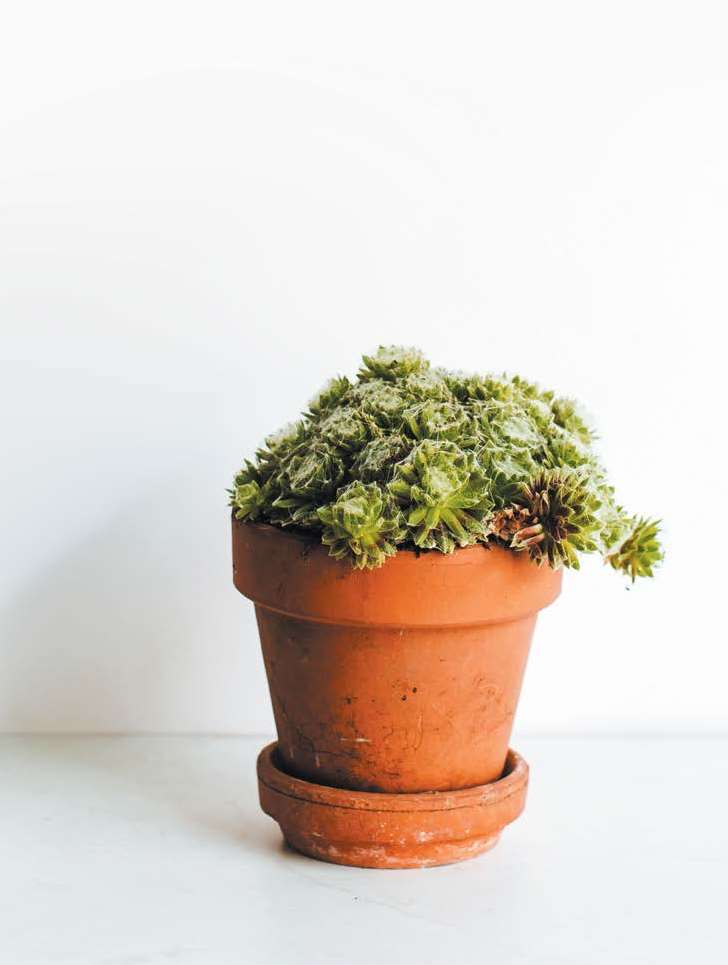
Succulents store water in their leaves or stems, so their care differs from that of moisture-loving tropical foliage. A bright position, an open potting mix and a pot that drains are the foundations. Water deeply when the mix has dried rather than giving frequent little splashes.
String of hearts
Small heart-shaped leaves line fine trailing stems. A hanging pot or high shelf shows off its elegant shape.
Care: Bright indirect light; water sparingly; well-drained mix.
Century plant (agave)
Agaves come in many sizes, colors and textures. Their sculptural rosettes suit a bright location, but some have sharp tips or irritating sap.
Care: Bright light; infrequent watering; keep away from children and pets.
Giant donkey’s tail
Dense, fleshy leaves cover stems that can cascade over a shelf. It is a succulent rather than a true cactus and may produce small late-season flowers.
Care: Bright indirect light; allow the mix to dry; avoid prolonged wetness.
Snake plant
Tall, upright leaves take little floor space and create a clear vertical accent. This robust plant tolerates lower light and irregular attention.
Care: Low to medium light; water sparingly; free-draining mix.
Zebra haworthia
Compact rosettes of pointed, striped leaves make this slow grower suitable for a small pot.
Care: Bright indirect light; infrequent watering; excellent drainage.
Blue chalk sticks
Blue-green cylindrical leaves set this succulent apart from the usual shades of green. It often grows most actively in cooler months.
Care: Bright light, including some direct sun; water sparingly; drain well.
String of beans
This fast-growing trailing succulent has curved, bean-like leaves and can produce cinnamon-scented flowers.
Care: Bright indirect light; low-frequency watering; free-draining mix.
Ox tongue (gasteria)
Thick, patterned leaves and a forgiving nature make gasteria an adaptable choice for a mixed succulent display.
Care: Low to medium light; water sparingly; drainage.
African milk tree
This upright euphorbia looks cactus-like but belongs to a different plant family. Its strong form can become a focal point.
Care: Bright indirect light; let the mix dry between waterings; avoid excessive winter water.
Cobweb hens and chicks
Fine white fibers across the rosettes create the appearance of cobwebs. The plant is compact and notably tolerant of temperature variation.
Care: Bright light; low-frequency watering; a fast-draining mix.
Mexican hens and chicks
Echeveria rosettes resemble permanent flowers. Remove dead lower leaves and water the soil rather than filling the rosette.
Care: Bright light with gentle morning sun; water sparingly; drain well.
Donkey ears
Large, softly textured leaves with markings explain the name. The plant appreciates a bright window but its leaves should be kept out of a pet’s reach.
Care: Bright light; let the mix dry between waterings; reduce water in winter.
Not every succulent has the same seasonal rhythm, so observe new growth and adjust watering to the actual condition of the mix. Handle spiny or irritating plants carefully.