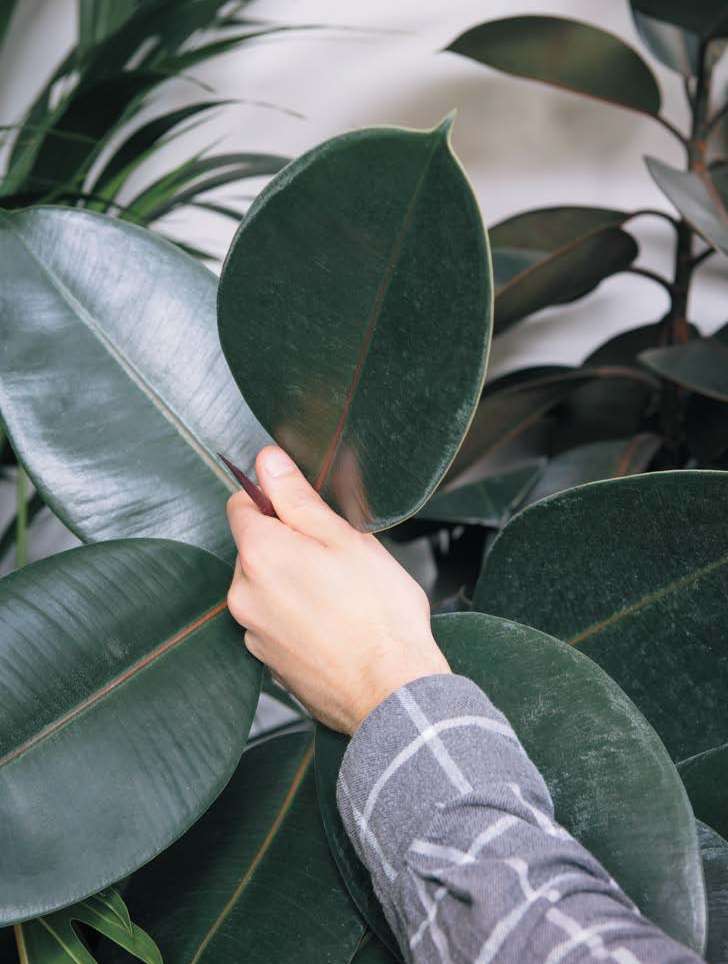
Plants show stress through their leaves, stems and roots. A single yellowing older leaf may be normal; a rapid change across the whole plant needs investigation. Before treating a symptom, check the soil moisture, light, temperature and recent changes in care. The same symptom can have more than one cause.
Read the leaves
Drooping or leaf fall can follow either drought or waterlogged roots. Feel the mix below the surface and check whether the pot drains freely. Curled leaves and crisp brown edges may point to dry air or too little water. Brown tips can also follow excess fertilizer or mineral buildup. Pale, scorched patches may indicate too much direct sun; long, sparse stems often signal too little light. If growth leans toward a window, turn the pot a little at each watering.
Watch for root problems
Root rot can make a plant look thirsty even when the mix is wet because damaged roots cannot take up water. Remove the plant, inspect its roots, trim clearly rotten tissue with clean shears and repot in fresh, suitable mix. Clean the container before reusing it. Better drainage and a watering routine based on the soil’s condition are the main defenses.
Find pests early
Inspect new purchases before placing them near other plants, and isolate an affected plant. Aphids gather on tender growth; a gentle rinse or wipe can remove them. Fungus gnats thrive in persistently damp mix, so let the surface dry when the plant allows it. Mealybugs resemble small cottony clusters, while scale appears as fixed bumps on stems and leaves. Spider mites may leave fine webbing and speckled foliage. Whiteflies gather under leaves and fly up when disturbed. Remove pests by hand or with a suitable treatment, following the product label and repeating as needed.
Keep plants clean
Wipe dust from leaves, remove dead material and maintain airflow. Wet foliage, stale air and decaying tissue can encourage fungal problems. Regular inspection makes small issues easier to contain and helps you learn each plant’s normal pattern of growth.